

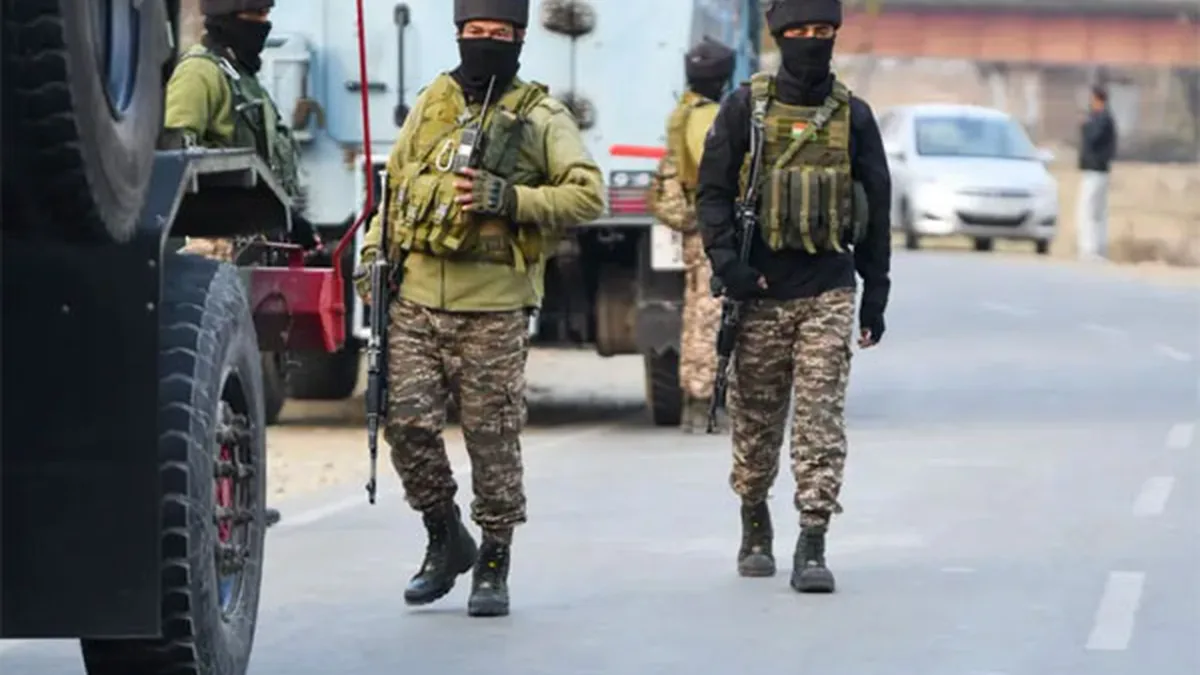
On Wednesday, November 11, defence experts in New Delhi highlighted the likely involvement of Pakistan‑backed overground workers in a terror strike that wounded three Central Reserve Police Force (CRPF) personnel in Kulgam district, Jammu and Kashmir.
Former Jammu and Kashmir Director General of Police S P Vaid told reporters that terrorist movement in the valley continues, estimating 60–70 active militants, about 95 per cent of whom are foreigners as local recruitment has dwindled. He warned that the presence of such fighters should alarm Army generals, whom he accused of running terror factories, and insisted that local support via overground workers enabled the attack.
Retired Brigadier Hemant Mahajan echoed Vaid, saying Pakistani agents operating as overground workers are present in Kashmir and could not be ruled out as contributors to the incident. However, he cautioned that the strike does not signal the start of a sustained campaign, citing the robust security grid that limits militant capacity.
Captain Anil Gaur (Retd.) noted that this is the first assault on CRPF personnel anywhere in India in the past twelve months, whether in Bastar, the Kashmir Valley or elsewhere. He suggested the attack may be retaliation for a recent joint operation involving the CRPF, the Army’s Rashtriya Rifles and the Jammu and Kashmir Police, urging locals to report any suspicious activity.
Defence analyst P K Sehgal raised questions about the attackers’ identity, probing possible links to Lashkar-e-Taiba, Hizbul Mujahideen or a local group, and whether they were infiltrators or home‑grown militants. He proposed two motives: Pakistan often strikes before mountain passes close for winter, and recent remarks by National Conference president Farooq Abdullah may have spurred local militants. Sehgal stressed that only a thorough investigation will clarify the motives.
Last month, Abdullah faced criticism after praising Pakistan's diplomatic efforts as having “saved” Kashmiris and condemning the Indian state's policies. The ongoing debate underscores the complex interplay of external influence and internal dynamics shaping security in the region.
Image: daijiworld.com
📰 Source: Daijiworld