Indri Lemurs Share Vocal Secrets with Opera Singers, Warwick Study Finds
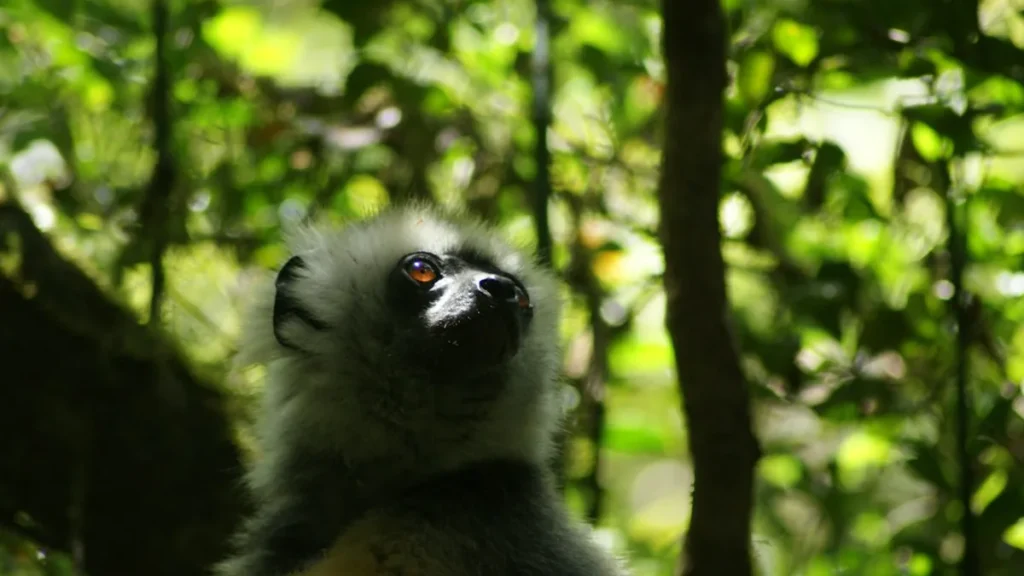
A recent scientific investigation has unveiled a remarkable convergence in vocalisation techniques between two seemingly disparate species: Indri lemurs and human opera singers. Researchers from the University of Warwick, including Dr. Chiara De Gregorio, have published findings demonstrating that these primates employ the very same acoustical principles as professional vocalists to ensure their voices carry across significant distances. This surprising discovery, made public recently, deepens our understanding of natural sound production.
The study highlights a shared, highly effective strategy for projecting sound. Both Indri lemurs, known for their haunting, siren-like calls across Madagascar's rainforests, and trained opera singers leverage specific vocal mechanisms to amplify and direct their sounds. This allows their calls to reach audiences or fellow lemurs situated far away, cutting through environmental noise or filling expansive performance halls. The technique focuses on optimising resonance and frequency modulation, ensuring both clarity and audibility, which is crucial for communication in dense environments or large public venues.
Dr. Chiara De Gregorio, a key researcher from the University of Warwick, shed further light on this fascinating discovery. "Our findings suggest an incredible evolutionary parallel," she noted during a recent discussion. "The ability to produce and project sound with such efficiency is vital for Indri lemurs for territorial marking, warning of predators, and maintaining social cohesion within their groups. This need is remarkably similar to an opera singer's requirement to fill an entire theatre with their voice without artificial amplification, conveying emotion and narrative across rows of listeners." The research delved into the precise physics of sound production, identifying the specific frequencies and resonance patterns that enable this powerful vocal delivery in both contexts.
This unexpected connection offers fresh insights into the evolutionary biology of sound communication and vocal learning across species. It suggests that certain optimal strategies for vocal projection might have independently evolved, driven by similar environmental or social pressures for effective long-distance communication. For coastal Karnataka's educated readers, this study underscores the intricate wonders of the natural world and the surprising lessons animal behaviour can offer about our own capabilities. The precision with which these lemurs manipulate their vocal cords mirrors the rigorous training undertaken by human singers, eloquently bridging the gap between wild nature and refined art.
Image for illustration purposes only
📰 Source: The Hindu Entertainment