

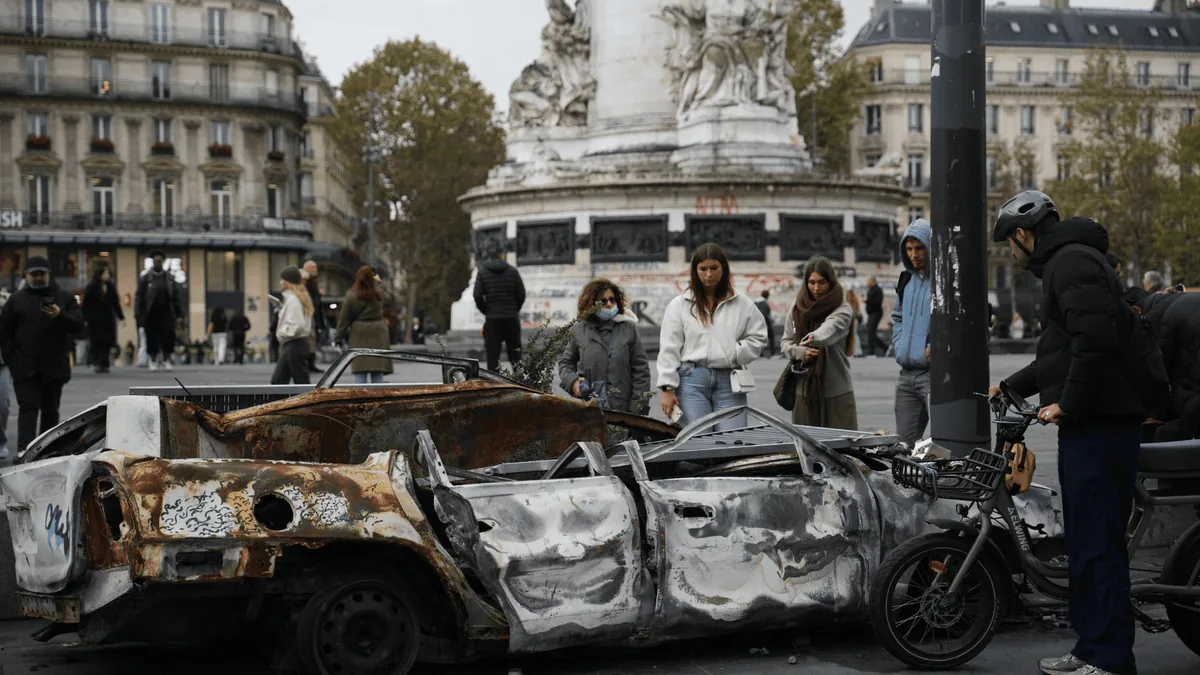
Tens of thousands of police officers fanned out across France on Saturday, October 24, as students and workers prepared for a new march in Paris, which authorities significantly curtailed following last week's violent unrest. The demonstration, focused on persistent grievances over school funding and the soaring cost of living, saw its planned central city route rerouted to the capital's southeastern edge, between Porte d'Italie and Porte de Vincennes.
Interior Minister Laurent Nunez confirmed the deployment of approximately 70,000 officers nationwide, supported by helicopters, armoured vehicles, and water cannons. Gendarmes also took positions beneath the Arc de Triomphe and along nearby avenues in central Paris. The protest movement, initiated last month over staff shortages at a high school southeast of Paris, has broadened into a national demand for more teachers, improved school buildings, increased university places, and higher wages and pensions to offset rising expenses. Trade unions, advocating for these economic improvements, have criticised the bans on several rallies, calling them violations of constitutional freedom of expression.
The capital's cultural institutions felt the immediate impact. Major museums, including the Louvre, Orsay, Picasso Museum, and Grand Palais (currently hosting a Cézanne exhibition), remained closed on Saturday, October 25. Art Basel, a prestigious contemporary art fair, opened only for Friday, October 23, with organisers cancelling its weekend programme due to security concerns. Parisian shopkeepers, many having already barricaded their premises throughout the week, continued to brace for potential unrest. Akram Ahmed, a 34-year-old contractor, described boarding up an optician's shop near the Saint-Lazare train station after receiving a desperate call from the owner. Following last weekend's disturbances, which saw some 3,000 shops damaged or looted across France, Paris police prefect Patrice Faure initially urged businesses to hire security, though he later clarified that public authorities bear the responsibility for protecting establishments.
Beyond Paris, local authorities banned several rallies in cities like Lyon, Nice, and Montpellier, though marches proceeded in Marseille. French media reported police using tear gas in Lyon on Saturday morning. The unrest's reach extended nationally, with Limoges' 19th-century city hall nearly destroyed by fire. Two suspects in that incident are now under formal investigation, facing charges that include attempted murder of a public official. President Emmanuel Macron, whose popularity is at a low point in the final phase of his term, defended the security measures as essential to protect city centres, businesses, and public buildings from further damage.
Image: siasat.com
📰 Source: Siasat Gulf