

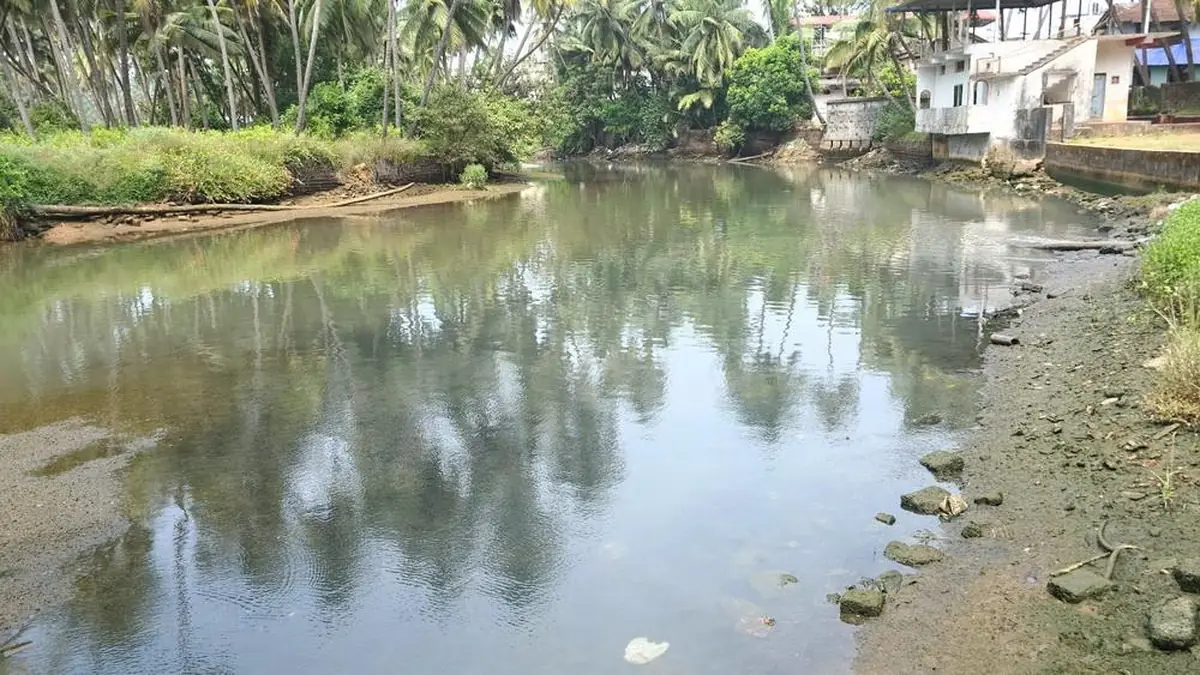
Bhatkal's Sarabi river continues to receive untreated sewage from the Ghausia Street Underground Drainage (UGD) pumping station, prompting residents from Ghausia Street, Mushma Street, Khalifa Street, and Daranta to prepare for a protest. Locals report that the once-pristine river has deteriorated into a foul-smelling drain, fostering mosquito breeding and raising serious concerns about well water contamination.
Residents are demanding an immediate and lasting solution to the environmental and public health risks. Beyond municipal authorities, some have also questioned the Majlis-e-Islah-wa-Tanzeem, alleging that promises made during the pumping station's establishment have not been fulfilled.
When residents approached the Bhatkal Municipal Office, Assistant Engineer Aravind clarified that the Karnataka Urban Water Supply and Drainage Board (KUWSDB) constructed the pumping station, while the municipality manages its maintenance. Aravind stated that both pumps operate normally, directing sewage to the Venkatapur river, located four kilometres away at a higher elevation. However, he acknowledged that excess sewage accumulating in the wet well likely overflows into the Sarabi river because the current system, designed nearly two decades ago, cannot cope with the increased volume. He emphasized that the system requires comprehensive re-engineering, as routine maintenance alone cannot resolve the issue.
The wider UGD network also faces challenges, including aging manholes and damaged pipelines that leak sewage, contributing to groundwater contamination. Rainwater ingress into the underground drainage system in several areas further exacerbates the problem. UGD connections from Gulmi, Bunder Road, and other localities reportedly link to the same wet well, with residents of Asarkeri also reporting contaminated wells.
As a long-term solution, Bhatkal-born engineer Jeelani Mohtisham, a senior figure at an engineering firm in Dubai, has proposed a modern wastewater treatment plant. During a recent visit, Mohtisham inspected the Ghausia Street pumping station and reviewed Bhatkal's UGD infrastructure. He asserted that simply repairing pumps and pipelines would be insufficient, advocating for scientific sewage treatment to remove solid waste, organic pollutants, and harmful microorganisms. Citing advanced systems in countries like Japan, he suggested treated water could be reused for non-potable purposes such as gardening and parks. Given concerns over civic body maintenance, Mohtisham also proposed conveying treated water via a separate pipeline to the Venkatapur river, subject to quality standards and environmental clearances. His preliminary assessment estimates a modern treatment plant could cost around Rs 10 crore, with the final price depending on sewage volume, plant capacity, and technology.
Image: sahilonline.org
📰 Source: Sahil Online